Spar mode

Nobody learns an opening on the first try. Spar plays it again.

Spar is a real game against a bird, played inside one opening you chose. It knows the book, it grades every move you make, and when you get one wrong you can take it back and play the same position again. Here is one position, three times.

  1. Take 1 1.d4 Nf6 2.Nf3 d5 3.Bf4 c5 4.e3 Qb65.Bd3?
  2. Take 2 1.d4 Nf6 2.Nf3 d5 3.Bf4 c5 4.e3 Qb65.b3?!
  3. Take 3 1.d4 Nf6 2.Nf3 d5 3.Bf4 c5 4.e3 Qb65.Nc3!

London System · Poisoned Pawn Variation · eight plies identical, one move different

Setting it up

Pick an opening. Pick a bird. That's the whole setup.

a8b7c6d5e4f3g2h1
3.Bf4. The bishop gets out before e3 shuts the door on it — the one move the whole system is named for.

The picker, as it looks in the app

  • Pigeon~600 Makes basic mistakes

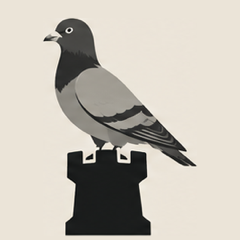
We chose the London System and the Pigeon — the weakest bird on the ladder, rated around 600. That matters: the Pigeon will not refute anything. Whatever goes wrong in the next three takes is entirely our own doing, and the app's grader will say so anyway.

One more switch on the setup screen — “Undo my move when I leave the London System” — turns the whole game into a hard rail. We left it off. We wanted to see what happens.

Move five

Four moves in, the Pigeon asks a real question.

a8b7c6d5e4f3g2h1
After 4…Qb6. The queen on b6 and the pawn on b2 are looking straight at each other, and nothing is defending b2.

This is not an exotic position. It is the fourth move of the most-played queen's-pawn system in club chess, and the black queen has stepped out to b6 with one idea: take the b2 pawn.

The opening book has a name for what happens next — London System: Poisoned Pawn Variation — and exactly one move at the top of it. Everything below is us failing to play that move twice.

Spar's topbar reads PLAY vs PIGEON · YOU ARE WHITE and, under it, Your move.

5.Bd3? Pressed: Play on

The move the plan told us to play.

Every London tutorial ends the same way: bishop to d3, knight to d2, castle. So we played bishop to d3. The card appeared before the Pigeon even replied — this position is in the book, and Bd3 is not the book's move — and we clicked Play on anyway, because the plan is the plan.

The Pigeon, rated 600, found 5…Qxb2 immediately. It is not a hard move to find.

a8b7c6d5e4f3g2h1
5.Bd3. And 5…Qxb2 just takes it. The pawn was not poisoned. It was free.

What the app said

Moves

4. e3BookB Qb6
5. Bd3MistakeE Qxb2

drops ~1.4 better was Nc3 watch for Qxb2 Nbd2 c4

Leaving the book gets you a comic panel, once. The verdict chip beside the move is the part that stays: Mistake, marked E for engine, because the book stopped having an opinion the moment we left it and the engine took over.

“drops ~1.4” is the real number: +0.30 → −1.09, White's point of view, from the same Stockfish the app runs in your browser. One pawn, and the bishop on d3 is not doing anything about it.

Take it back. Two plies come off the board and the position is exactly the one we mishandled. Same opening, same bird, same question.

5.b3?! Pressed: Show me the book move

The move you play when you've just lost a pawn.

Burned once, we did the obvious thing and defended the pawn. b2–b3. Safe. Solid. Also not a London System move, so the card came back — and this time we took the second button.

What the app said

Off book.

b3 isn't a London System move.

Book here: Nc3 London System

Take it back Show me the book move Play on

Move undone · arrow drawn · your turn again

“Show me the book move” does two things and no more: it takes the move back, and it paints a green arrow on the board. It does not play the move for you. You still have to pick the piece up.

a8b7c6d5e4f3g2h1
The arrow. 5.Nc3 — the only move the London System book has here.
a8b7c6d5e4f3g2h1
What b3 would have got us. The pawn is safe. So is Black. Nothing was punished, and nothing was learned.

Had we played on instead

Moves

5. b3QuestionableE Nc6

Why? drops ~0.4 better was Nc3

b3 is not a disaster. It is worse than that for a student: it is fine. The evaluation barely moves, the Pigeon has no reason to do anything wrong, and you finish the game having practised a position that isn't the London System. A questionable move is one you can play for years without ever finding out.

Back again. Third time at the same board, same eight plies behind us, arrow still fresh in mind.

5.Nc3! Pressed: nothing — no card appeared

You don't defend b2. You let him have it.

The book's move develops a piece and ignores the threat completely. That is the idea the variation is named after, and it is the exact idea two takes of guessing never produced: the pawn is bait, and the knight is the reason it works.

a8b7c6d5e4f3g2h1
5.Nc3. b2 is still hanging. That is the move.

What the app said

Moves

5. Nc3BookB Qxb2

Book, marked B. In spar the book outranks the engine: if a move is in the opening you chose, that is the verdict, and no evaluation gets to argue with it. There is no why-line, because there is nothing to explain away.

The Pigeon took the pawn. Of course it did — it is rated 600 and the pawn is hanging.

a8b7c6d5e4f3g2h1
6.Nb5. Nxc7+ is coming, the queen is stranded on b2, and Black is a pawn up with a lost position.

End of the opening

Perfect book play

5/5 book moves — 100%

You came out ahead.

That card is the whole point of spar. Not “you won” — the Pigeon was never going to win — but you played the opening you said you were going to play, and every move of it was in the book. It is tracked per opening and per side, so the next London game starts from a number you can beat.

Taking on b2 costs Black 2.65 pawns. Nb5 hits c7, the queen has nowhere sensible to go, and the pawn it just won is the least interesting thing on the board.

Where the numbers come from. Every evaluation on this page was produced by the same Stockfish build the app bundles, at depth 12 — the depth VS_GRADE_DEPTH in the app grades a live move at — except the 6.Nb5 figure, which is depth 22. The verdict bands are the app's own: ≤10cp Best, ≤30 Good, ≤70 Questionable, ≤150 Mistake, above that Blunder. The book path is whatever buildBookTree() derives from the Lichess opening index for the root name you picked, and at this position it returns exactly one continuation.

The chips

Seven verdicts, two authorities.

Every move you make in a spar gets one of these, next to the move, in the list. B means the opening book decided. E means the engine did.

  • BookB Still inside the opening you chose. Outranks everything.
  • BrilliantE The engine's top move, and it gave up material to play it.
  • BestE The engine's top move, or within a tenth of a pawn of it.
  • GoodE Costs under a third of a pawn. Nothing to fix.
  • QuestionableE Playable, but something better was there. Take 2's move.
  • MistakeE Gives back a real chunk of the position. Take 1's move.
  • BlunderE Loses material or the game. Comes with a comic panel.

Mistakes and blunders show their why-line straight away. Everything else keeps it behind a Why? link, so a decent move doesn't get a lecture.

The opponents

Five birds. The opening stays the same; the punishment doesn't.

The Pigeon lets you get away with things. The Eagle does not. Same book, same verdicts, same take-back — the only variable is how quickly a loose move turns into a lost one.

  • Pigeon~600Makes basic mistakes
  • Lark~900Spots simple threats
  • Rook~1200Solid club player
  • Raven~1600Punishes inaccuracies
  • Eagle~2000Precise and unforgiving

Every bird is available on every plan. Nothing on this ladder is locked.

What it costs

Three spars a day, free.

A spar is metered as one game, not one move — so a take-back never costs you anything, and neither does replaying the same position five times inside the game you already started.

Free

$0

  • 3 games per day against any bird.
  • Every opening, every bird, every verdict chip.
  • Take-backs, the off-book card and the book-move arrow.
  • The engine's single best move in the analysis panel.

Signed out, spar isn't metered at all — play as much as you like before you make an account.

Pro

$7 / month · $49 / year

  • Unlimited games. No daily count.
  • The engine's top 3 lines, with evals and continuations.
  • Everything else in BirdChess, unmetered.

Run out on the free plan and the app says so plainly: “You've played today's free games against the bird. Pro Birds play without limits.”

Your turn

Pick one opening. Get it wrong. Take it back.

Nothing on this page took more than four minutes to happen. The London System is one of seven openings on the setup screen, and the position you get stuck on will be your own.